Pain after a dental implant usually eases within a week, with painkillers advised for the first 48 hours after treatment. Managing pain after a dental implant also means protecting the healing area: ice packs can be applied for 10 minutes each hour during the first 6 hours, and soft foods are recommended for at least a week.
It’s understandable to want to know what’s normal and when you should feel more comfortable. This guide explains how pain may change during recovery, how to care for your mouth, which soft foods can help, and what to consider when using painkillers. You’ll also learn which changes are a reason to contact your dentist, so you can approach healing with a clearer sense of what to expect.
Key Takeaways
- Discomfort usually lasts up to a week; notice whether it is gradually easing, and contact your dentist if pain worsens after day three.
- Protect the healing area with gentle oral care, following advice on when to begin salt-water rinses and how to clean near the implant.
- Choose soft foods for at least a week and avoid chewing directly over the implant site while it heals.
- Use painkillers as advised for the first 48 hours after treatment, and seek dental advice if your recovery raises concerns.
How long does pain last after a dental implant?
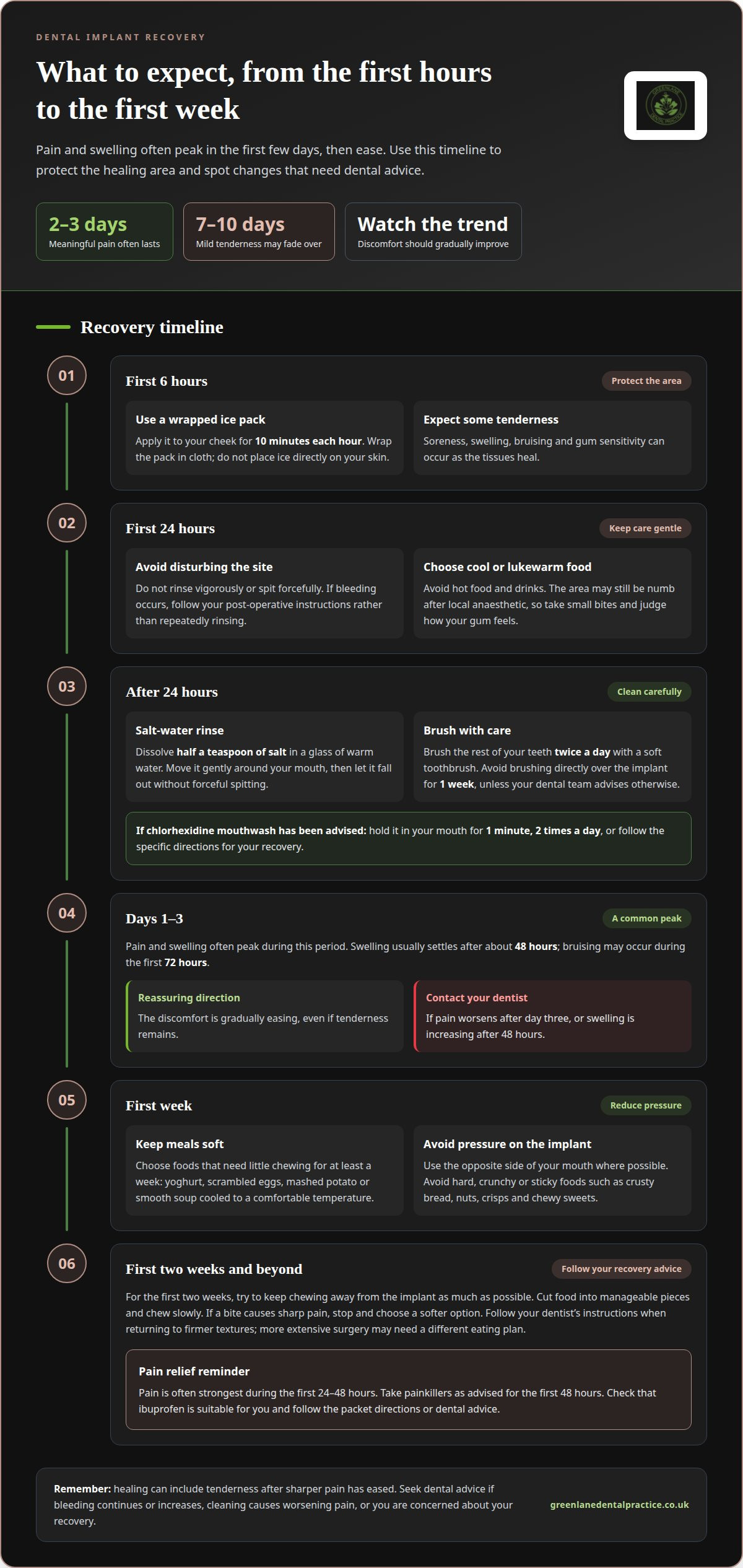
Meaningful pain often lasts 2 to 3 days after implant surgery, while mild tenderness may fade over 7 to 10 days. Swelling, bruising and gum sensitivity can also occur as the tissue heals.
Expected soreness and swelling
Soreness is tenderness or aching around the treated area as the gum and deeper tissue recover. Pain and swelling often peak during days 1 to 3, then improve; swelling usually settles after about 48 hours, though discomfort can last up to a week.
For comfort, apply an ice pack for 10 minutes each hour during the first 6 hours after treatment. Wrap it in cloth and hold it against your cheek, rather than placing ice directly on your skin. Bruising may accompany swelling during the first 72 hours.
Gum sensitivity during recovery
Gum sensitivity is soreness around the implant site, particularly when the area is touched or used for chewing. It can reflect healing tissue and may remain after sharper pain has eased. Notice whether it is gradually improving rather than worsening.
Contact your dentist if pain worsens after day three, or if swelling is increasing after 48 hours. This change differs from discomfort that steadily eases during the first week.
Pain compared with tooth extraction
Pain after an implant is not consistently worse or milder than pain after a tooth extraction. Implant surgery affects the gum and jaw tissue, while an extraction removes a tooth. The extent of treatment and your pain sensitivity influence the discomfort you feel.
For example, multiple implants or additional procedures such as bone grafting can mean discomfort lasts a few days longer. If you are considering ibuprofen, check that it is suitable for you and follow the packet directions or dental advice.
In the UK, the cost of implant aftercare or an emergency dental appointment depends on the case and is given after a quote request. It varies with whether assessment, treatment or follow-up care is needed.
Mouthwash and oral hygiene during healing
Gentle cleaning helps keep your mouth fresh while the gum heals after implant placement. During the first day, avoid vigorous rinsing or forceful spitting, which can disturb the treated area. If bleeding occurs, follow your post-operative instructions rather than repeatedly rinsing to clear the taste.
After 24 hours, salt-water rinses can help keep the area clean. Dissolve half a teaspoon of salt in a glass of warm water, then let the liquid move gently around your mouth before allowing it to fall out. Avoid swishing forcefully. If you have been advised to use chlorhexidine mouthwash, hold it in your mouth for 1 minute, 2 times a day, or follow the specific directions provided for your recovery.
Keep brushing the rest of your teeth twice a day, using a soft toothbrush and careful movements near the surgical site. Avoid brushing directly over the implant area for 1 week after treatment, unless your dental team gives different instructions. This helps limit irritation whilst still removing plaque from other surfaces. Don’t scrub tender gums or use vigorous rinsing to compensate.
Once the initial healing period has passed, cleaning around the implant remains important. Plaque can inflame the surrounding tissues, so keep up regular brushing and clean between your teeth as advised. If bleeding continues or increases, or cleaning causes worsening pain, seek dental advice rather than stopping all oral care. Medication or a prescribed mouthwash may also affect your routine, so use each as directed.
For tailored support with keeping your mouth clean after treatment, hygiene appointments can help you understand suitable care for your healing gums and implant.
Soft foods and avoiding the implant site when chewing
Soft foods reduce pressure on the surgical area while the gum heals. For at least a week after treatment, choose foods that need little chewing and keep bites away from the implant site.
Choosing soft and soothing foods
Soft foods are easy to chew and put less strain on healing tissue, helping you eat without repeatedly pressing on the surgical area. Try yoghurt, scrambled eggs, mashed potato or smooth soup cooled to a comfortable temperature.
For the first 24 hours, avoid hot food and drinks after implant surgery. Heat can be uncomfortable while your mouth is recovering, particularly if local anaesthetic has left the area numb. Choose cool or lukewarm options, and take small bites so you can judge how the gum feels.
Chewing precautions around the implant
Chewing precautions mean using the opposite side of your mouth where possible, rather than placing food directly over the implant site. Avoiding pressure helps protect the surgical area as the tissues heal.
For the first two weeks after placement, try to keep chewing away from the implant as much as possible. Cut food into manageable pieces and chew slowly. If a bite causes sharp pain, stop and choose a softer option rather than testing the area again.
Foods to avoid while healing
Hard, crunchy or sticky foods can require forceful chewing and press against the implant site. Avoid foods such as crusty bread, nuts, crisps and chewy sweets during early recovery. Softer alternatives place less pressure around the implant.
Keep soft foods in your meals for at least a week, then follow your dentist’s instructions on moving to firmer textures. If you have had more extensive surgery, you may need a different eating plan. Don’t rush back to foods that cause discomfort or seem to lodge near the wound.
After the first 24 hours, gentle salt-water rinses can help soothe the gums and keep the mouth clean. Mix half a teaspoon of salt into a glass of warm water, move it gently around your mouth, then let it fall out without forceful spitting. If rinsing increases bleeding or pain, follow your dentist’s post-operative advice.
Pain and painkillers after dental implant treatment
Discomfort after dental implant surgery is normal, and pain is often strongest during the first 24 to 48 hours. For managing pain after dental implant treatment, take painkillers as advised for the first 48 hours. Use the medication and timing recommended by your dental team, and follow the packet instructions for any over-the-counter medicine.
Ibuprofen is commonly used for dental pain, but it isn’t suitable for everyone. Check with a dental professional or pharmacist before taking it if you have asthma, a stomach ulcer, kidney problems or take blood thinners. Don’t assume a medicine is safe because you’ve taken it before. Your health and other medication can affect whether it’s appropriate.
Take prescribed pain relief as directed rather than increasing the dose if discomfort persists. Pain that gradually eases is different from pain that worsens after day three. Contact your dentist if pain is getting worse, returns after improving or continues beyond the expected recovery period. Throbbing pain on the day of surgery also warrants dental advice.
Pressure around the implant can feel tender, but a loose implant or healing component needs prompt dental assessment. Seek advice if swelling increases, you develop a fever or feel significantly unwell. If bleeding is excessive or does not settle as instructed, contact your dental team instead of relying on painkillers to manage it.
If you have questions about managing pain after dental implant placement, or discomfort is worsening or difficult to control, arrange an emergency dental appointment. Bring details of any medication you’ve taken, including its name and timing, to help the dentist assess your symptoms and advise on suitable pain relief.
Greenlane Dental Practice: Dental Implants
Greenlane Dental Practice provides dental implants in Leigh and can support you if you’re considering treatment or have questions about recovery. An assessment helps establish your needs and discuss the treatment process, including the care required after placement.
Healing doesn’t end when initial soreness settles. The implant continues to integrate with the bone over several months, so following aftercare advice and attending planned reviews remain important. If discomfort worsens, the implant feels loose or symptoms concern you, seek dental advice promptly rather than relying on painkillers alone.
If you’re considering implant treatment or need help with a concern after placement, contact Greenlane Dental Practice in Leigh to discuss your next step.
Move forward with confidence
A thoughtful approach to managing pain after a dental implant includes making space for questions as your mouth heals. If a symptom changes or you’re unsure how to continue your usual routine, sharing your concerns with a dental professional can help you understand the next step. Your comfort and longer-term oral health both matter.
Greenlane Dental Practice in Leigh offers dental implants, alongside Invisalign Clear Aligners, Porcelain Veneers and Professional Teeth Whitening for different treatment goals. If you’re considering implant treatment or would like to discuss a concern during recovery, contact the practice to talk through your next step.
Contact Greenlane Dental Practice to discuss your dental needs and find a reassuring way forward.
Frequently Asked Questions
Is it normal to have more pain after a bone graft and implant on the same day?
Yes, discomfort can last a few days longer after an implant combined with a bone graft than after straightforward implant placement. The treated area is more extensive, so soreness may affect a wider part of your jaw. Follow the post-operative instructions you were given, and contact your dentist if pain is increasing rather than easing or new symptoms develop.
How Do You Relieve Implant Pain at Home?
Use the aftercare plan from your dental team, including the medication instructions provided for your treatment. Rest and avoid strenuous activity or heavy lifting for 48 to 72 hours after surgery, as exertion can make recovery less comfortable. Keep track of whether your symptoms are settling. Pain that returns after improving or becomes more intense needs dental advice.
Is the Procedure Painful?
Dental implant surgery is performed under anaesthesia, so you shouldn’t feel discomfort during the operation. Once the local anaesthetic wears off, a dull ache or tenderness can begin. Temporary numbness for a few hours is expected, but contact your dentist if numbness remains the following day. The extent of surgery and your individual pain sensitivity affect how recovery feels.
What Should You Avoid After Dental Implant Surgery?
Avoid smoking and alcohol for at least two weeks after surgery, as both can interfere with healing. Avoid strenuous exercise, heavy lifting and bending for 48 to 72 hours. If you wear dentures, ask about your post-operative instructions, since some patients may need to avoid wearing them for up to two weeks. Follow the advice given for your procedure.
When Should You Contact Your Dentist?
Contact your dentist if pain worsens after the third day, swelling keeps increasing after 48 hours, or bleeding does not stop as instructed. Seek urgent medical attention for significant facial swelling or difficulty breathing or swallowing. A loose-feeling implant also needs dental assessment. These changes call for professional attention rather than simply waiting for routine healing to continue.
Which Painkillers Can You Take After an Implant?
Ibuprofen or paracetamol may help after implant surgery if suitable for your health and other medication. Follow the packet directions and any instructions from your dental team; don’t exceed the stated dose. Ibuprofen may not be appropriate if you have asthma, a stomach ulcer, kidney problems or take blood thinners. Ask a pharmacist or dentist if you’re unsure which option is safe for you.