A clear retainer doesn’t need harsh cleaners to stay fresh. The practical answer to how to clean Invisalign retainers is to rinse them under running cold water, gently brush with a soft toothbrush and liquid soap, then rinse thoroughly again, according to the NHS. Clean your aligners every day, at least once.
It’s easy to focus on the retainer itself, but what you eat and how you care for your teeth matter too. This guide explains what to use, how often to clean your aligners, how to prevent staining and how to tackle stubborn buildup without abrasive products. Rinsing after removal and keeping your teeth clean help prevent residue from sitting against your smile. A simple routine can make everyday wear feel fresher and more comfortable.
Key Takeaways
- Use a soft-bristled brush and mild, clear liquid soap for a gentle clean, then rinse the aligners thoroughly.
- Build cleaning into your daily routine, and rinse your aligners whenever you remove them to help clear away saliva.
- Take aligners out before eating or drinking anything other than water to help avoid stains from coloured foods and drinks.
- For stubborn buildup, learn how a diluted white vinegar soak may help and why gentle handling matters.
- Keep your teeth clean before putting aligners back in, so food particles and plaque are less likely to become trapped.
1. What Should You Use to Clean Your Invisalign Aligners?
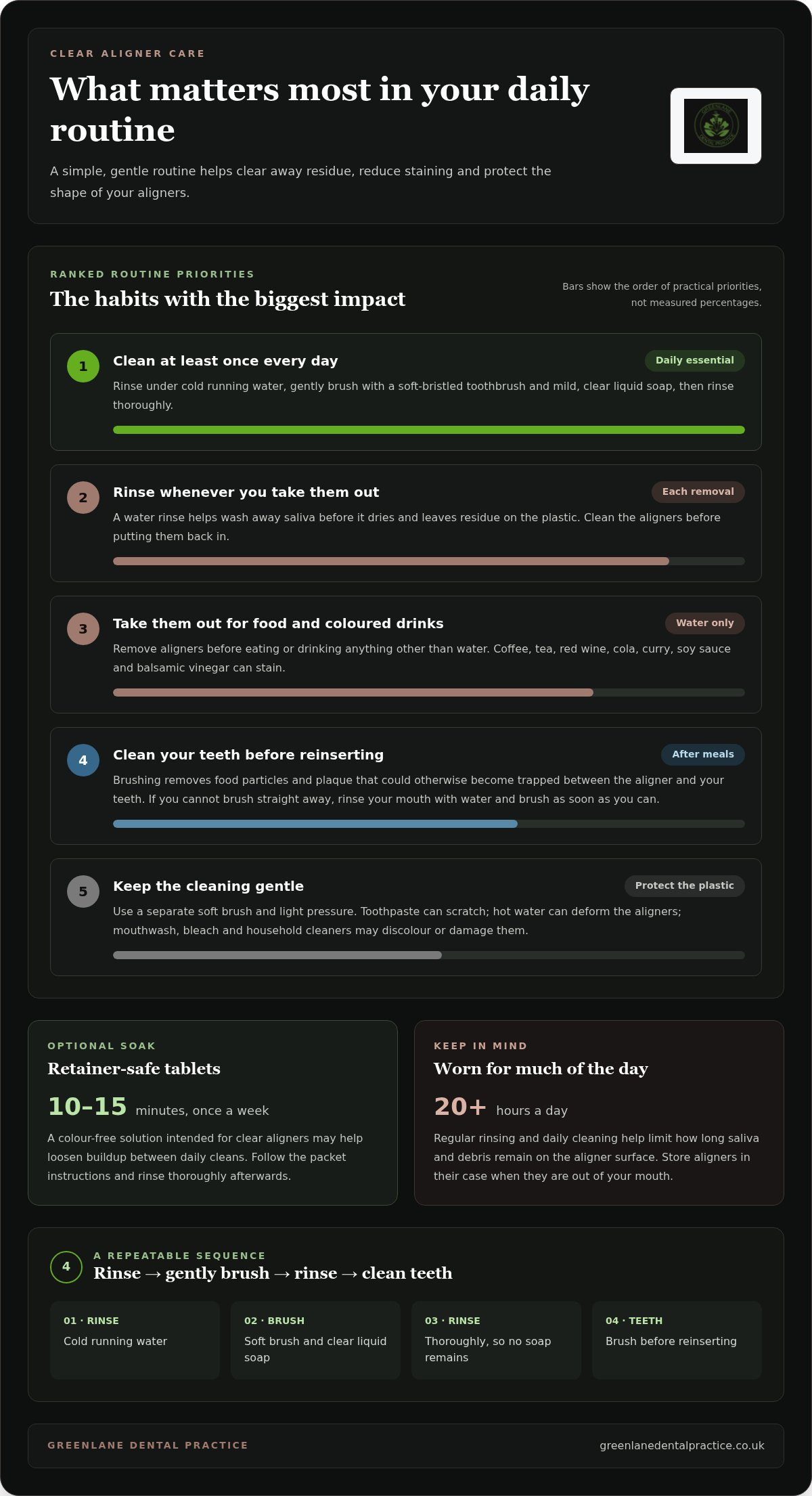
For a daily clean, rinse your aligners under cold running water, then gently brush them with a soft-bristled toothbrush and liquid soap. The NHS recommends liquid soap rather than toothpaste for cleaning a retainer. Rinse thoroughly afterwards so no soap residue remains on the plastic when you wear it again.
Choose a mild, clear soap without added dyes, which can stain clear aligners. Antibacterial liquid soap is another practical option for brushing away residue. Use a separate toothbrush just for your aligners to avoid transferring toothpaste and particles from brushing your teeth. Keep the brush clean between uses and apply light pressure rather than scrubbing.
Gently brush the inner and outer surfaces, including the grooves that fit around each tooth. A soft brush helps loosen saliva film and everyday buildup without the force of hard bristles. If a patch remains, rinse the aligners and brush it again gently. Don’t scrape the plastic with sharp objects, which can scratch the surface.
Toothpaste isn’t the best choice for routine retainer cleaning. Its abrasives can gradually create tiny scratches, making the clear surface look dull or cloudy. Soap is suitable for brushing, but choose a mild, clear formula: coloured soap may stain, while scented soap can leave an unpleasant taste. Don’t soak aligners in mouthwash, as dyes or other ingredients may discolour or damage the surface.
Clean your teeth before putting the aligners back in. Brushing removes food particles and plaque that could otherwise sit between the appliance and your teeth. If you’ve just eaten, rinse your mouth and brush before reinserting the aligners. This simple step supports oral hygiene and helps keep the appliance clean.
Store aligners in their case whenever you’re not wearing them. A case keeps them together and away from household surfaces where dust or food particles could settle. After cleaning, rinse them thoroughly before placing them in your mouth or case. If you don’t have the case to hand, keep the aligners in a clean, dry place rather than leaving them exposed.
Make the routine easy to repeat: rinse, gently brush with clear liquid soap, rinse again, then clean your teeth before reinserting. Daily care helps remove fresh residue before it dries onto the aligners. If persistent cloudiness or an odour remains after gentle cleaning, don’t reach for stronger household cleaners or abrasive products.
2. How often to clean aligners
Clean Invisalign aligners at least once a day, even during treatment when you change to a fresh set. Rinse them whenever you remove them, then clean them before putting them back in. This helps wash away saliva before it dries and leaves residue on the plastic. A morning and evening clean, with rinsing after removal, makes a steady routine.
Take your aligners out before eating or drinking anything other than water. Food particles can lodge between the plastic and your teeth, while coloured drinks can stain the aligners. After eating, rinse your mouth and clean your teeth before reinserting them. If you can’t brush straight away, rinse your mouth and aligners with water, then clean your teeth as soon as you can.
Retainer-cleaning tablets can be used for a soak if they’re intended for clear aligners and you follow the packet instructions. Use the stated amount of water and soak for the recommended time, then rinse the aligners thoroughly before wearing them. A short soak in a colour-free retainer-safe solution once a week for 10 to 15 minutes may help loosen buildup between daily cleans.
Choose cleaning methods carefully. Toothpaste can gradually scratch aligners, and mouthwash may discolour them or affect the plastic. Avoid hot water, which can deform their shape, and don’t use bleach or household cleaners. If a tablet’s instructions don’t say it’s suitable for clear aligners, don’t assume that it is. Mild soap and a soft brush remain a simple daily option.
Colour can transfer from coffee, tea, red wine and cola, as well as curry, soy sauce and balsamic vinegar. Removing aligners before meals and drinks other than water helps prevent direct contact with these potential stains. Rinse the appliance after taking it out, especially after eating, and don’t leave it sitting in a coloured drink while you finish your meal.
Keep the routine consistent throughout treatment. Invisalign aligners are worn for 20+ hours a day, so regular rinsing and daily cleaning help limit the time saliva and debris remain on the surface. Store them in their case when they’re out of your mouth, rather than wrapping them in a napkin or leaving them beside food. If they remain cloudy or smell after gentle cleaning, avoid stronger products that could scratch or damage them.
3. Preventing stains by avoiding food and coloured drinks
Clear aligners can pick up colour from coffee, tea, red wine and cola. Foods such as curry, soy sauce and balsamic vinegar can also leave visible stains. The simplest prevention is to remove your aligners before eating or drinking anything other than water. Keep them in their case while you eat, rather than placing them on a napkin where spills or food particles can reach them.
After a meal, rinse your mouth and clean your teeth before wearing the aligners again. Brushing helps remove coloured residue and plaque from tooth surfaces, reducing what could be trapped beneath the plastic. If you can’t brush immediately, rinse your mouth with water and wait until you can clean your teeth before reinserting the appliance. Don’t sip a coloured drink slowly with aligners in, as liquid can linger around your teeth and the plastic.
Water temperature matters when cleaning. Rinse the aligners with cool or lukewarm water, not hot water. Heat can deform the plastic and affect how the appliance sits over your teeth. Avoid leaving aligners beside a hot drink or rinsing them under a hot tap, even briefly. A cool-water rinse after removal helps clear saliva before it dries on the surface.
Toothpaste may seem like a natural cleaner, but it can gradually scratch clear plastic. Tiny marks can make aligners look dull and give residue more places to cling. Baking soda is also abrasive, so don’t use it to scrub. Instead, choose a soft toothbrush and mild, clear liquid soap. Brush gently across both sides, then rinse thoroughly to remove all soap.
Mouthwash isn’t a substitute for an aligner cleanser. Some mouthwashes contain dyes that can discolour clear plastic, and soaking an appliance in mouthwash may affect its surface. Bleach and household cleaners are unsuitable too: strong chemicals can damage the material and leave residue that shouldn’t sit against your teeth. Avoid coloured or strongly scented soaps, which can stain aligners or leave an unpleasant taste.
Make prevention part of your eating routine. Before a meal, remove the aligners and place them in their case. Afterwards, rinse your mouth, brush your teeth and rinse the aligners before wearing them again. Drinking only water while wearing them avoids exposing the plastic to coffee, tea or coloured food residue. Consistent care helps keep the appliance clearer between cleans.
4. Removing hard buildup with diluted white vinegar
Hard deposits can cling to clear aligners even when you rinse them after removal. A diluted distilled white vinegar soak may help loosen buildup before gentle brushing. Mix one part vinegar with three parts water, then soak the aligners for 15 to 20 minutes. Use a clean container and keep the mixture away from your eyes and mouth.
After soaking, remove the aligners and brush them gently with a soft toothbrush. Rinse them thoroughly under cool or lukewarm running water before wearing them again. Don’t use vinegar undiluted or extend the soak beyond the stated time. The acidic solution is for loosening deposits, not for replacing your everyday cleaning routine.
Some cleaning guidance also describes soaking aligners in equal parts hydrogen peroxide and lukewarm water for 20 minutes. If using this method, prepare a fresh mixture, keep to the stated duration and rinse the appliance thoroughly afterwards. Never use hydrogen peroxide undiluted or combine it with vinegar or another cleaner. Avoid hot water, which can deform the plastic.
To remove stains, plaque and odour from Invisalign retainers, rinse them after removal, brush gently with a soft toothbrush and mild liquid soap, then rinse thoroughly. For hard buildup, a brief soak in diluted vinegar may help loosen deposits, but avoid abrasive scrubbing and stronger household cleaners.
Cloudiness can have different causes. Dried saliva and plaque may lift with rinsing, gentle brushing or a suitable soak, while scratches from abrasive toothpaste can leave the surface looking dull. A vinegar soak won’t repair scratches or restore a distorted aligner. Don’t scrub harder to remove a cloudy patch, as extra friction may mark the plastic further.
Make rinsing part of each removal during Invisalign treatment. Saliva left to dry can form residue, so rinsing promptly helps limit deposits before they harden. Clean the aligners with a soft brush and soap, then soak them only when extra buildup needs attention. Store them in their case between wears instead of leaving them exposed to dust or food particles.
If an aligner still smells or looks cloudy after gentle cleaning, don’t reach for bleach, household cleaners or abrasive powders. Persistent changes may need your dentist’s advice, particularly if the aligner feels rough, no longer sits properly or appears damaged. Describe what you’ve tried and show the appliance rather than increasing the strength or duration of a soak.
Keep the cleaning steps separate: rinse after removal, brush gently, use a diluted soak for deposits, then rinse thoroughly again. This approach helps remove residue without treating the plastic like a hard household surface. When cleaning Invisalign aligners, don’t mix solutions and follow the stated soaking times.
5. Oral hygiene and clean retainers
A clean retainer is only part of the routine. Food particles and plaque trapped between an appliance and your teeth can contribute to tooth decay and gum problems over time. Before putting your aligners back in after eating, clean your teeth and rinse the appliance. This helps keep both your mouth and the plastic fresh.
Brush your teeth at least twice a day with fluoride toothpaste, and clean between your teeth daily. A toothbrush reaches tooth surfaces, while floss or another suitable interdental cleaner can clear debris between them. These steps matter particularly before reinserting an aligner after a meal, when crumbs or sugary residue could otherwise remain pressed against your teeth.
Rinse aligners with lukewarm water whenever you take them out. This clears saliva before it dries and becomes harder to remove. Clean the appliance properly each morning and evening, and rinse it after removal during the day. A soft-bristled toothbrush and suitable cleaning solution can help remove residue without harsh scrubbing.
Build a simple sequence around meals: remove the aligners, eat, rinse your mouth, brush your teeth and clean the appliance before wearing it again. If you can’t brush immediately, rinse your mouth with water to clear loose particles, then brush before reinserting the aligners. Don’t use hot water on the plastic, as heat can change its shape.
Aligners may be changed every few weeks, but each set still needs cleaning throughout its wear. A fresh set isn’t a reason to skip rinsing or oral hygiene. Keep your case clean too, and use it whenever the appliance is out of your mouth. This helps protect the clean surface from dust and food residue between wears.
Pay attention to changes in your mouth as well as your retainer. Persistent plaque around the gumline, bleeding during brushing or an unpleasant taste can signal that your daily cleaning routine needs attention. Brush gently along the gumline and clean between your teeth rather than relying on rinsing alone. Regular dental examinations can also help keep your oral hygiene routine on track.
For a thorough clean, follow the instructions supplied with any retainer cleaning solution and rinse the appliance before wearing it. Cleaning crystals, for example, are designed to soak with aligners or retainers for 15 minutes or longer. Don’t substitute mouthwash or household cleaners, and avoid abrasive products that could scratch the plastic.
If you’d like support with your everyday dental hygiene, book a hygiene appointment to discuss your cleaning routine and oral health.
Greenlane Dental Practice: Invisalign Clear Aligners
Greenlane Dental Practice provides Invisalign Clear Aligners for people exploring a discreet orthodontic option. If you’re considering aligner treatment or have questions about keeping your aligners clean during wear, a dental appointment can help you discuss your goals and oral health needs.
Good home care supports your dental hygiene, but it doesn’t replace regular professional attention. Routine dental examinations can help monitor your teeth and gums as you follow an aligner plan. If an aligner becomes damaged, feels uncomfortable or stays cloudy despite gentle cleaning, raise the issue at an appointment rather than trying harsher products.
For a friendly conversation about Invisalign Clear Aligners, contact Greenlane Dental Practice or visit greenlanedentalpractice.co.uk.
Make your retainer routine part of your smile plan
A steady care routine can support your confidence throughout aligner treatment. Knowing how to clean Invisalign retainers is one part of looking after your smile; the next is choosing dental care that suits your goals, comfort and oral health. If you’re considering clear aligners or want to talk through a change to your smile, a personal discussion can help you understand your options.
Greenlane Dental Practice offers Invisalign Clear Aligners, alongside Porcelain Veneers and Professional Teeth Whitening. These treatments address different concerns, so the right conversation starts with what you’d like to change and the condition of your teeth. You don’t need to decide everything at once. A thoughtful discussion can help you take the next step with clarity.
Contact Greenlane Dental Practice to discuss your smile goals and explore your options. A considered next step can help you feel more at ease with your dental care.
Frequently Asked Questions
What Should You Use to Clean Your Invisalign Aligners?
Use a soft toothbrush with mild liquid soap, then rinse the aligners thoroughly. The NHS advises rinsing a retainer under running cold water and cleaning it with a toothbrush and liquid soap rather than toothpaste. Keep a separate brush for the appliance, so toothpaste residue doesn’t transfer onto its surface. Choose clear soap without dyes, and follow the instructions provided with any cleaning solution made for dental appliances.
How to Remove Stains From Invisalign Trays?
First, work out whether the mark is a stain or surface damage. Coloured residue may respond to gentle brushing and a suitable cleaning soak, but scratches can make clear plastic look cloudy and won’t be removed by stronger cleaning. Remove trays before coffee, tea or meals, and don’t try to bleach discolouration with household products. If the appearance changes suddenly or the tray becomes rough, show it to your dentist.
Any cleansers to avoid?
Avoid bleach, household cleaners, abrasive powders, toothpaste and mouthwash as routine aligner cleansers. Abrasives can scratch plastic; dyes in mouthwash or coloured soap can leave discolouration. Hot water can also distort the tray, so don’t sterilise it in boiling water or put it in a dishwasher. Never mix cleaning products to make a stronger solution. If a cleanser’s label doesn’t say it’s suitable for clear dental appliances, choose a gentler method.
Is there any research on best cleaning practices?
Research has examined invisible aligners, but a study’s design alone doesn’t establish one best home-cleaning method. A study described in Clinical, Cosmetic, and Investigational Dermatology examined aligners changed every 2 weeks over 6 weeks. For practical cleaning, the NHS advises liquid soap and a toothbrush rather than toothpaste. Follow your aligner instructions too, since appliance materials and recommended cleaning products can differ.
Should You Brush Your Teeth Before Putting Your Retainer Back In?
Yes, brushing before reinserting helps clear food residue and plaque that could otherwise sit against your teeth. After a meal away from home, rinse your mouth with water if you can’t brush straight away, then brush before wearing the tray again. Keep up your usual oral-care routine, including cleaning between your teeth. This protects your teeth and gums, not just the appliance.
What is the best way to deep-clean Invisalign retainers?
Use a cleaning solution intended for retainers or clear aligners, and follow its label for soaking time and preparation. For example, use Invisalign cleaning crystals according to their instructions, then rinse the appliance and container thoroughly. Don’t extend a soak or add vinegar, peroxide or another cleanser unless the product directions support that method. To clean Invisalign retainers thoroughly, follow the product instructions rather than increasing its strength or soaking time.
Which cleaning products are safe for Invisalign retainers in the UK?
A soft toothbrush and mild, clear liquid soap are practical choices; the NHS recommends liquid soap rather than toothpaste for retainers. Products made specifically for clear aligners can also be used when their instructions say they’re suitable. In Leigh, Manchester, Greenlane Dental Practice offers Invisalign Clear Aligners, and patients can raise appliance-care questions during dental care related to their treatment.
How often should you clean Invisalign retainers?
Clean aligners at least once a day, and rinse them whenever you remove them. A morning and evening clean can help make the habit consistent, while rinsing after removal prevents saliva from drying on the surface. If you’ve eaten, clean your teeth before putting the tray back in. Regular cleaning helps you maintain a consistent routine. Store the appliance in its case when it’s out, rather than leaving it exposed on a table or wrapped in a tissue.